SI-01 · English original · ZH · ZH-TW · VI
Trace는 언제 transmission line인가?
PCB trace를 언제 transmission line으로 다뤄야 하는가?
무료 전체 답
먼저 생각해 보기. 읽기 전에 먼저: 결정하는 것이 clock 주파수인가, 다른 것인가? 반사의 왕복 시간과 edge가 올라가는 시간을 나란히 놓고 생각해 본다.
답 보기
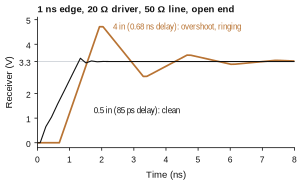
먼저 이렇게 말한다: 첫 추정으로, trace delay가 10–90% rise time의 약 1/5–1/6보다 길 때. 실제 경계는 stackup delay와 허용할 수 있는 왜곡에 따라 달라진다. FR4 delay는 ~150–180 ps/in이므로 1 ns edge면 ~1 inch 넘는 것은 모두 transmission line이고, 100 ps edge면 ~0.1 inch 넘는 것은 모두 그렇다. clock rate가 아니라 edge다: 1 ns edge의 1 MHz clock도 약 1 inch보다 긴 trace에서 ringing이 생긴다. line으로 다루고 topology에 맞는 termination을 고른다.
외워 둘 숫자: FR4에서 v = c/√Dk ≈ 6 in/ns. Len_max[in] ≈ RT[ns]. BW ≈ 0.35/RT.
면접관이 듣고 싶은 것:
- clock 주파수가 아니라 rise time이 정한다
- 숫자로 된 길이 기준(rise-time 길이의 약 1/6)
- 대책: termination을 하거나 trace를 짧게
흔한 실수. clock 주파수로 답하는 것. 1 ns edge의 1 MHz clock도 약 1 inch보다 긴 trace에서는 ringing이 생긴다. edge가 먼저 정하고, 그다음 topology가 termination을 정한다.
다음 무료 질문: 반사와 reflection coefficient →
책에 더 있습니다
이 질문은 Hardware Engineer Interview Questions(영어판)의 SI-01입니다. 책에는 141개 질문이 모두 같은 방식으로 답해져 있습니다: 먼저 할 말, 설명 순서, 외워 둘 숫자, 이어지는 follow-up.