PW-01 · English original · KO · ZH-TW · VI
Buck 变换器如何工作
解释同步和非同步 buck 变换器的工作原理。画出 switch node、电感和输出电容上的电压与电流波形。
免费完整答案
先想一想。 先别往下看:在稳态下,每个周期开始和结束时电感电流必须满足什么?把它写成方程,Vout 就出来了。
查看答案
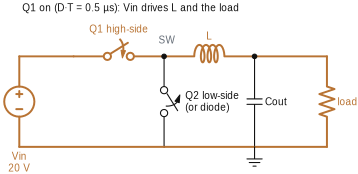
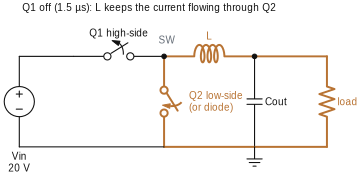
先这样回答: 开关把 Vin 斩成 switch node 上的方波,LC 滤波器对它取平均。稳态时电感的伏秒平衡:(Vin − Vout)·D·T = Vout·(1 − D)·T → Vout = D·Vin(理想、稳态 CCM;用二极管时 Vout ≈ D·Vin − (1 − D)·Vf)。非同步 buck 通过二极管续流;同步 buck 用下管 FET。
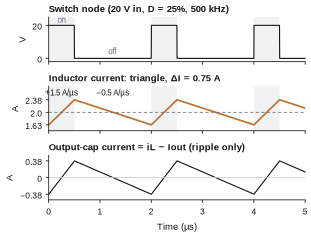
波形
- Switch node:从 Vin 到 −Vf(二极管)或 ≈0 V(同步)的方波。
- 电感电流:围绕 Iout 的三角波;开关导通时斜率 +(Vin − Vout)/L,关断时 −Vout/L(二极管时为 −(Vout + Vf)/L);ΔI = 峰峰值纹波。
- 输出电容:流过 i_L − Iout;纹波 ≈ ΔI/(8·fsw·C) + ΔI·ESR(不含 ESL 尖峰)。
- 输入电容:脉冲电流,是 EMI 最差的环路(PW-09)。
要记住的数字: 20 V → 5 V 时 D = 25%(理想同步)。把 C 项和 ESR 项纹波相加,就是一个快速估算。
面试官想听到的:
- D = Vout/Vin 是用 volt-second balance 推出来的,不是背出来的
- 电感电流是三角波;输出纹波来自 ΔI 以及电容的 ESR 和 ESL
- 同步与二极管方案:dead time 与导通损耗的取舍
常见错误。 把电感电流画成方波,或者从 switch node 电压上读输出纹波。电感电流是三角波,输出纹波来自 ΔI。
书里还有更多
本题是 Hardware Engineer Interview Questions(英文版)中的 PW-01。全书 141 道题都按同样方式作答:先说什么、怎样解释、要记住的数字,以及接下来的追问。