PW-01 · English original · KO · ZH · VI
Buck 變換器如何工作
解釋同步和非同步 buck 變換器的工作原理。畫出 switch node、電感和輸出電容上的電壓與電流波形。
免費完整答案
先想一想。 先別往下看:在穩態下,每個週期開始和結束時電感電流必須滿足什麼?把它寫成方程,Vout 就出來了。
查看答案
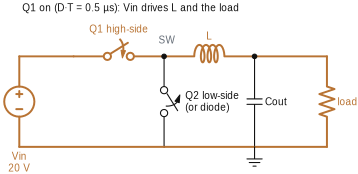
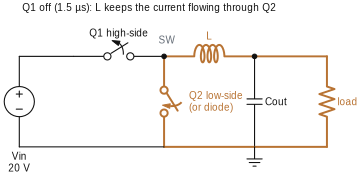
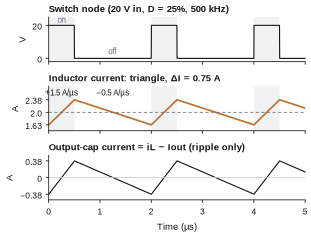
先這樣回答: 開關把 Vin 斬成 switch node 上的方波,LC 濾波器對它取平均。穩態時電感的伏秒平衡:(Vin − Vout)·D·T = Vout·(1 − D)·T → Vout = D·Vin(理想、穩態 CCM;用二極體時 Vout ≈ D·Vin − (1 − D)·Vf)。非同步 buck 透過二極體續流;同步 buck 用下管 FET。
波形
- Switch node:從 Vin 到 −Vf(二極體)或 ≈0 V(同步)的方波。
- 電感電流:圍繞 Iout 的三角波;開關導通時斜率 +(Vin − Vout)/L,關斷時 −Vout/L(二極體時為 −(Vout + Vf)/L);ΔI = 峰峰值紋波。
- 輸出電容:流過 i_L − Iout;紋波 ≈ ΔI/(8·fsw·C) + ΔI·ESR(不含 ESL 尖峰)。
- 輸入電容:脈衝電流,是 EMI 最差的環路(PW-09)。
要記住的數字: 20 V → 5 V 時 D = 25%(理想同步)。把 C 項和 ESR 項紋波相加,就是一個快速估算。
面試官想聽到的:
- D = Vout/Vin 是用 volt-second balance 推出來的,不是背出來的
- 電感電流是三角波;輸出紋波來自 ΔI 以及電容的 ESR 和 ESL
- 同步與二極體方案:dead time 與導通損耗的取捨
常見錯誤。 把電感電流畫成方波,或者從 switch node 電壓上讀輸出紋波。電感電流是三角波,輸出紋波來自 ΔI。
書裡還有更多
本題是 Hardware Engineer Interview Questions(英文版)中的 PW-01。全書 141 道題都按同樣方式作答:先說什麼、怎樣解釋、要記住的數字,以及接下來的追問。