AN-02 · English original · KO · ZH-TW · VI
−10 反相增益与非理想因素
画一个反相增益为 −10 的运放电路。真实运放会怎样改变你的设计?
免费完整答案
先想一想。 先别往下看:决定带宽和输出失调的是 −10 的信号增益,还是别的增益?信号源看到的阻抗又是多少?
查看答案
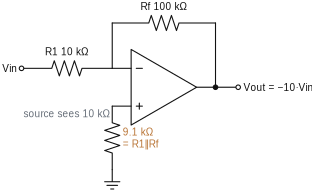
先这样回答: 输入 R1 = 10 kΩ,反馈 Rf = 100 kΩ,+ 输入接地(单电源时接 VREF,此时 Vout = VREF − (Rf/R1)·(Vin − VREF))。Gain = −Rf/R1 = −10。
实际影响
- Input bias current × Rf 会产生输出失调;在 + 输入串 R = R1‖Rf(9.1 kΩ),当信号源阻抗低且两个 bias current 相等(双极型输入)时可抵消大部分,剩下约 Ios·Rf。
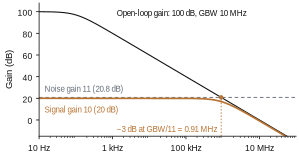
- Input offset voltage × noise gain(1 + Rf/R1 = 11)出现在输出端。
- Bandwidth = GBW / noise gain = GBW/11,不是 GBW/10。
- 输入阻抗只有 R1(10 kΩ),会给信号源加负载。
- 电阻取值:太小浪费电流、加重输出负载;太大则 Johnson noise 增加,bias current 误差变大。
面试官想听到的:
- 决定带宽和输出失调的是 noise gain(11),不是 signal gain(10)
- 输入阻抗就是 R1,所以要按信号源来选 R1
- 你会选一个电阻量级(例如 10 kΩ/100 kΩ)并说明理由
常见错误。 说带宽是 GBW/10。带宽和失调都按 noise gain 1 + Rf/R1 = 11 来算。
书里还有更多
本题是 Hardware Engineer Interview Questions(英文版)中的 AN-02。全书 141 道题都按同样方式作答:先说什么、怎样解释、要记住的数字,以及接下来的追问。